Ever stood in the salon and watched the technician flip a switch, then wondered whether the humming device is a UV lamp or an LED lamp? The answer can change how long your gel lasts, how much you spend, and even how safe you feel under that bright glow. Let’s cut through the hype and get down to the science, the dollars, and the day‑to‑day realities of UV vs LED nail lamp choices.
In This Article
How UV and LED Lamps Work
UV Light Basics
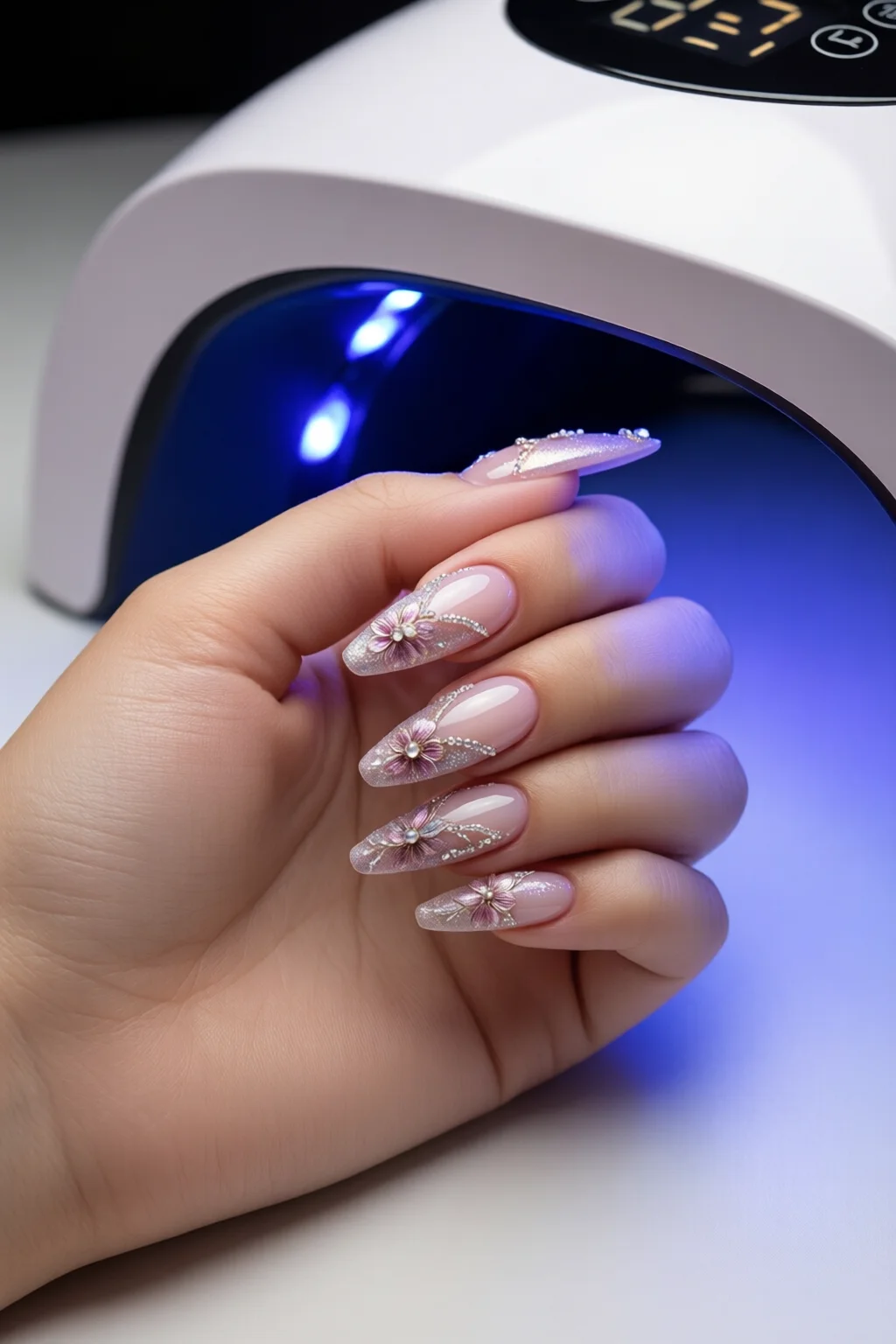
Traditional UV lamps emit a broad spectrum of ultraviolet light, typically ranging from 365 nm to 405 nm. This range is perfect for curing the photoinitiators in most gel polish formulas, which were originally designed for UV exposure. A 36‑watt UV lamp, such as the SUNUV Sun5, delivers a steady stream of photons that polymerize the gel in about 2 minutes for a base coat and 60 seconds for a top coat.
LED Light Basics
LED lamps, on the other hand, use light‑emitting diodes that focus on a narrower wavelength—usually around 405 nm. Because the light is more concentrated, the curing reaction is faster. An 18‑watt LED unit like the MelodySusie 48W can harden a full‑coverage gel in 30 seconds, shaving off precious salon time. The trade‑off? Not every gel formula is optimized for LED, so you’ll see “LED‑only” or “dual‑cure” labels on the bottle.
Curing Chemistry
Both UV and LED lamps trigger a photoinitiator—commonly benzoyl peroxide or diphenyl(2,4,6‑trimethylbenzoyl)phosphine oxide (TPO). When the light hits, the initiator splits, forming free radicals that link the monomers into a solid polymer. The speed of this reaction hinges on light intensity (measured in mW/cm²) and exposure time. In practice, a 36 W UV lamp at 10 mW/cm² for 120 seconds equals an 18 W LED lamp at 20 mW/cm² for 30 seconds.
Choosing the Right Lamp for Your Routine
Home vs. Professional Use
For home mani‑cures, portability and price dominate the decision. A compact LED lamp like the Kiara Sky 48W, priced at $49, fits on a bathroom shelf and runs on USB‑C power. In a professional studio, durability and power matter more; a 48‑watt UV lamp with a 120 minute bulb life—like the Gelish Pro 72—costs around $180 but can handle dozens of clients daily.
Power & Wattage
Wattage isn’t the whole story; the actual light output (mW/cm²) determines cure speed. A 36 W UV lamp typically emits 12 mW/cm², while an 18 W LED can push 24 mW/cm². When comparing models, look for the “intensity” spec on the packaging. Higher intensity means less waiting time, but also a higher heat feel on the fingertips.
Size & Portability
Most LED units are slimmer because the diodes sit in a flat panel. A 24‑watt LED with a 6‑inch diameter opening fits comfortably on a kitchen counter. UV lamps often require a larger dome to disperse the broader light, so they can be bulkier. If you travel often, a foldable LED lamp (e.g., the SUNUV Sun10) is a game‑changer.
Cost, Longevity, and Safety
Price Range
Entry‑level LED lamps start at $30 (e.g., the YIANYU 24W), while high‑end UV models can exceed $250 (e.g., the CND UV Luxe). The initial outlay matters, but don’t forget consumables: UV bulbs need replacement every 100‑150 cures, costing $15‑$25 each, whereas LED diodes last 30,000‑50,000 hours—effectively the life of the lamp.
Bulb Lifespan
In my salon, a 36 W SUNUV UV lamp survived 120 client sessions before the bulb dimmed. After swapping the bulb, cure times returned to spec. An LED lamp I use daily, the MelodySusie 48W, still shines brightly after 2 years of 8‑hour‑a‑day use—no performance drop.
Health Considerations
Both lamp types emit UV‑A radiation, which can cause skin aging over years of exposure. The difference is subtle: UV lamps emit a broader spectrum, while LED’s narrower band reduces overall UV‑A output by roughly 30 %. Wearing fingerless gloves or applying a broad‑spectrum sunscreen (SPF 30+) before curing can mitigate risk. One mistake I see often is skipping the sunscreen because the lamp “looks safe” – the light still reaches the skin.
Real‑World Performance: Brand Comparisons
Top UV Lamps
- SUNUV Sun5 – 36 W, 2‑minute cure, $59. Replaces bulb every 120 cures.
- Gelish Pro 72 – 72 W, 30‑second cure for Gelish formulas, $179. Built‑in timer and auto‑off.
- CND UV Luxe – 48 W, ergonomic design, $129. Comes with a 3‑year warranty.
Top LED Lamps
- MelodySusie 48W – 48 W, 30‑second cure, $79. Wide 8‑inch opening, compatible with most gels.
- Kiara Sky 48W – 48 W, dual timer, $49. USB‑C power, perfect for travel.
- YIANYU 24W – 24 W, budget‑friendly $30, slower 45‑second cure but still reliable.
Mixed Reviews
Clients often report that LED lamps struggle with older “classic” UV gels, leaving a tacky finish. Conversely, some high‑watt UV lamps cause excessive heat, making the nail bed feel uncomfortable. In my experience, pairing a dual‑cure gel (e.g., OPI GelColor) with an LED lamp eliminates the heat issue while keeping cure times short.
| Feature | Typical UV Lamp | Typical LED Lamp |
|---|---|---|
| Wavelength (nm) | 365‑405 | ≈405 |
| Average Cure Time | 60‑120 seconds | 30‑45 seconds |
| Bulb Lifespan | 100‑150 cures | 30,000‑50,000 hours |
| Price (USD) | $50‑$200 | $30‑$100 |
| Compatibility | All gel formulas | LED‑only or dual‑cure gels |
| Heat Output | Higher (can reach 45 °C) | Lower (typically ≤35 °C) |
Pro Tips from Our Experience
Prep Matters More Than the Lamp
Even the fastest LED lamp won’t rescue a nail that’s oily or un‑prepped. Start with a clean nail, push back cuticles, and use a nail primer guide to remove moisture. A thin layer of primer reduces cure time by up to 15%.
Layering & Timing
Apply gel in 0.2‑mm thin coats. Thick layers trap heat and can cause bubbling. With a 48 W LED, a base coat cures in 30 seconds, a color in 30‑45 seconds, and a top coat in 30 seconds. If you’re using a UV lamp, add 10‑15 seconds per layer to avoid tackiness.
Maintenance Hacks
Wipe the lamp’s interior with a lint‑free cloth after each session. For UV units, replace the bulb before it flickers—this keeps the mW/cm² consistent. Keep the power cord coiled loosely to avoid overheating. I keep a spare LED bulb set for the SUNUV Sun5; swapping takes under a minute.
Special Effects Compatibility
Planning a chrome powder nails or glitter nails look? LED lamps cure the adhesive layer quickly, but the powder needs a firm base. I always finish the chrome layer with a 10‑second UV “seal” to lock in the sparkle.
Shape & Design Considerations
If you love dramatic silhouettes like stiletto nails, choose a lamp with a wide opening (≥8 inches) to accommodate the length. A narrow dome can cause uneven curing on the tip, leading to chips.
Conclusion: Which Lamp Wins the Battle?
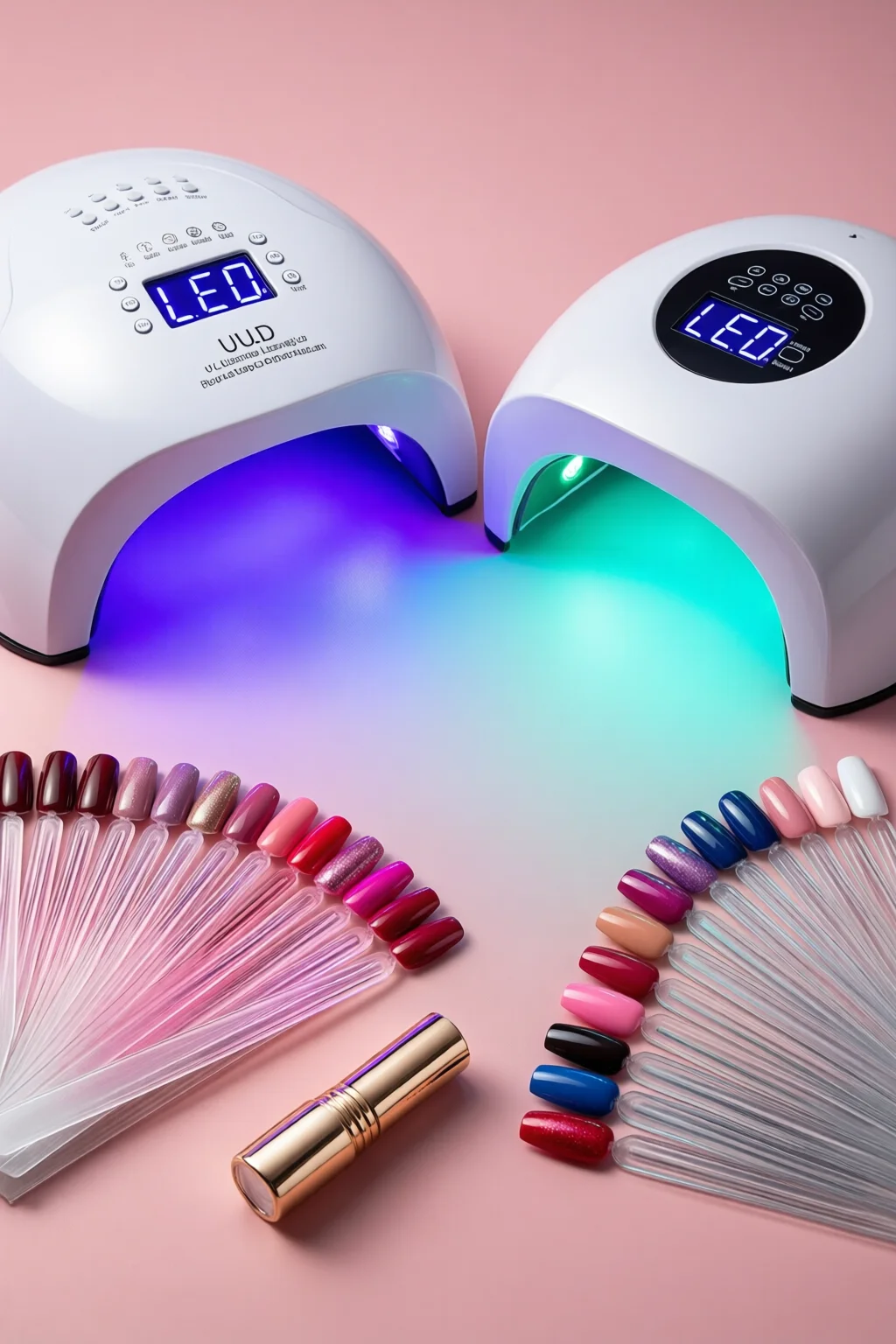
The choice between UV vs LED nail lamp ultimately hinges on three factors: the gels you love, your budget, and how often you cure. If you’re a casual home user who enjoys the newest LED‑only formulas, a 48 W LED like the Kiara Sky offers speed, low heat, and a lifetime of diodes for under $50. If you run a professional studio or favor a wide range of gel brands, a 36‑watt UV lamp such as the SUNUV Sun5 gives you universal compatibility and a proven track record, albeit with a modest bulb replacement cost.
My final advice? Start with the lamp that matches the products you already own, then upgrade as your technique evolves. Remember: good prep, thin layers, and regular maintenance will make any lamp perform like a champion.
Do LED lamps work with all gel polish brands?
Most modern gel polishes are formulated for dual‑cure (UV + LED) use, but some older “classic” UV gels require the broader UV spectrum. Check the product label; if it says “LED‑compatible” you’re safe. Otherwise, stick with a UV lamp.
How often should I replace the bulb in a UV lamp?
A typical UV bulb lasts 100‑150 cures. When you notice longer cure times or a dimmer glow, replace it. Spare bulbs cost $15‑$25 and are easy to swap.
Is it safe to use these lamps daily?
Yes, but protect your skin. Apply a thin layer of SPF 30+ sunscreen on your hands or wear fingerless UV‑blocking gloves. Limit exposure to the recommended cure times.
Can I use a UV lamp for acrylic nails?
Acrylic nails cure with a polymerizing liquid and a UV/LED lamp. Both lamp types work, but LED lamps cure faster and generate less heat, reducing the risk of acrylic lifting.
3 thoughts on “UV Vs LED Nail Lamp – Tips, Ideas and Inspiration”